
Skip to content

Truma Gas Diesel Heaters

We stock a diverse range of heaters to stay warm during your travels, including Gas/LPG Diesel heaters from AU Focus, Truma & Webasto. Check out our new guide on the best diesel heaters in 2026 for a comprehensive guide before purchasing. We also offer portable heaters, providing flexibility and convenience on the road. 

Original price $2,149.00 - Original price $2,149.00
Original price $2,149.00
$2,149.00
$2,149.00 - $2,149.00
Current price $2,149.00

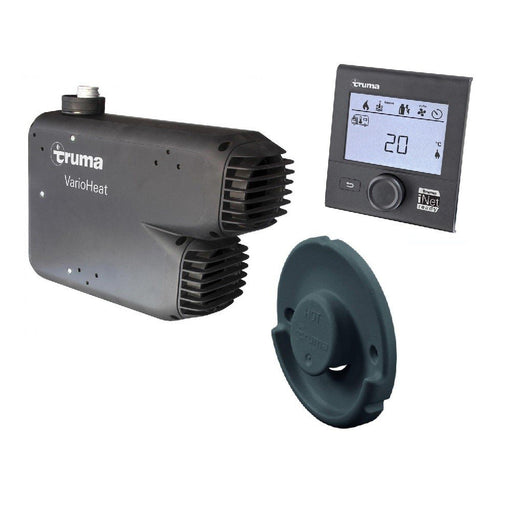
Truma Varioheat Eco Heater With Black Cowl - Gas

Truma Part Number: VARIOHEAT-KIT BLK

Truma VarioHeat eco Heater - Gas Powerful caravan heater with two output levels Automatic regulation of the heating output depending on the set...

View full details
Original price $2,149.00 - Original price $2,149.00
Original price $2,149.00
$2,149.00
$2,149.00 - $2,149.00
Current price $2,149.00
Original price $2,149.00 - Original price $2,149.00
Original price $2,149.00
$2,149.00
$2,149.00 - $2,149.00
Current price $2,149.00

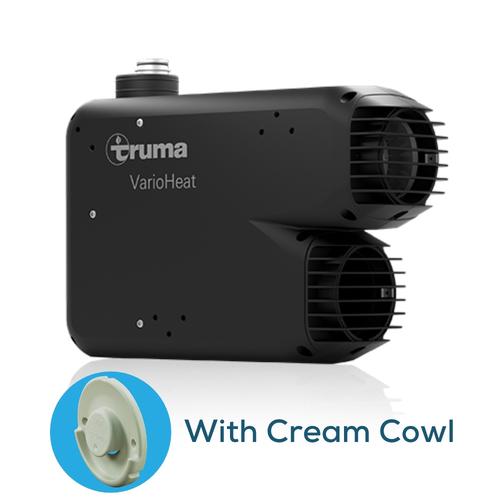
Truma Varioheat Eco Heater With Cream Cowl - Gas

Truma Part Number: VARIOHEAT-KIT

Truma VarioHeat eco Heater - Gas Powerful caravan heater with two output levels Automatic regulation of the heating output depending on the set...

View full details
Original price $2,149.00 - Original price $2,149.00
Original price $2,149.00
$2,149.00
$2,149.00 - $2,149.00
Current price $2,149.00

Diesel or Gas: Which Caravan Heater Is Right for You?

The short answer: diesel suits long trips, off-grid touring and anyone chasing dry heat with low running costs. Gas suits caravan-park travellers who already carry a large LPG bottle for cooking and hot water and want instant warmth without a separate fuel system.

  • Heat quality. Diesel delivers dry heat through a fully sealed combustion chamber vented outside. Gas produces a warmer wet heat that can add condensation to the cabin.
  • Running cost. Diesel typically costs $4 to $6 a night on low to medium. Gas is generally higher per hour and depends on LPG price and bottle exchange cost.
  • Installer. Diesel installs are DIY legal in Australia, with a licensed installer recommended for warranty. Gas heaters must be installed by a licensed gas fitter who issues a compliance certificate.
  • Refuel access. Diesel is available at every servo from Port Augusta to Cape York. LPG swap-and-go gets scarce once you head into remote country.
  • Off-grid suitability. Diesel has low 12V draw and small overnight fuel use. Gas is also workable off-grid but is tied to your LPG bottle cycle.

Brand Comparison: The Three Heaters We Stock

Every unit on this page is supported in Australia with local parts and a 24-month warranty. Here is how the three sit side by side.

AU Focus 2kW Bluetooth Diesel (Gen 4)

  • Fuel: Diesel
  • Heat output: 1.0 to 2.0 kW
  • Fuel use: 0.13 to 0.30 L per hour
  • Startup current draw: 8 to 12 A while the glow plug warms up
  • Running current draw: 0.5 to 2.5 A
  • Smart control: Bluetooth app plus physical controller
  • Australian warranty: 24 months
  • Best fit: Vans up to about 7 m
  • Price: $699 with tank

Webasto Air Top 2000 STC

  • Fuel: Diesel
  • Heat output: 0.9 to 2.0 kW stepless
  • Fuel use: 0.12 to 0.24 L per hour
  • Startup current draw: 8 to 10 A while the glow plug warms up
  • Running current draw: 0.8 to 2.5 A
  • Smart control: Digital control standard, Bluetooth available
  • Australian warranty: 24 months
  • Best fit: Vans up to about 7 m, built for long-haul use
  • Price: From $1,649

Truma VarioHeat Eco

  • Fuel: LPG gas
  • Heat output: 1.3 kW (night mode) to 2.8 kW (boost)
  • Fuel use: Varies with LPG demand, two-stage automatic regulation
  • Startup current draw: No glow plug spike
  • Running current draw: 0.65 A on stage 1, 2.75 A on stage 2
  • Smart control: Truma CP plus digital panel
  • Australian warranty: 24 months
  • Best fit: Vans up to about 7.5 m already plumbed for gas
  • Price: $2,149 kit

AU Focus is fitted as factory standard by over 90 Australian caravan manufacturers, which is why parts are quick to source and warranty turnaround is short. Webasto is the long-haul choice with decades of marine and RV use behind it. Truma is the pick if your van is already plumbed for gas and you do not want to add a second fuel system.

What Size Diesel Heater Do You Need?

Heater size is driven by van length, insulation quality and where you camp. Use the sizing guide below as a starting point, then size up one tier if you head into sub-zero alpine country.

  • Camper trailer or pop-top with minimal insulation, up to 4.9 m: 2 kW heater.
  • Standard van with moderate insulation, up to 6.7 m: 2 kW heater.
  • Standard van with moderate insulation, 6.7 m to 9 m: 5 kW heater.
  • Composite van with double glazing, up to 8 m: 2 kW heater is comfortable.
  • Any van regularly camped below minus 5 degrees: 5 kW for headroom.

Counter-intuitively, a 5 kW unit running at 40 per cent load is usually quieter and uses less fuel than a 2 kW unit running flat out to do the same job. If you spend a lot of time in the Victorian High Country, the Snowy Mountains or the Tasmanian central highlands, size up.

What Does It Actually Cost to Run?

We track Melbourne metro diesel prices monthly through PetrolSpy. At the April 2026 average of $3.18 per litre, here is what overnight heating looks like in real dollars.

  • 2 kW on low (0.13 L/h): $4.13 for a 10-hour overnight run, $28.94 over a 7-night trip.
  • 2 kW on medium (0.20 L/h): $6.36 for a 10-hour overnight run, $44.52 over a 7-night trip.
  • 5 kW on low (0.16 L/h): $5.09 for a 10-hour overnight run, $35.62 over a 7-night trip.
  • 5 kW on medium (0.35 L/h): $11.13 for a 10-hour overnight run, $77.91 over a 7-night trip.

Most travellers run their heater on low to medium overnight with the thermostat cycling the unit on and off, so real-world spend usually sits at $4 to $6 a night for a typical Victorian winter. Regional servos can run 10 to 30 cents above the metro price, so budget a touch more if you are headed remote.

Battery, Solar and 12V Wiring

A 2 kW diesel heater pulls 8 to 12 amps for the two-minute glow plug warm-up, then settles to 0.5 to 2.5 amps for the rest of the night. Over a 10-hour run, expect 10 to 20 Ah of battery use.

  • 200 Ah lithium: overnight heating plus fridge and lights barely dents capacity.
  • 100 Ah lithium: comfortable for one to two nights between charges.
  • 100 Ah AGM (50 Ah usable): fine for a single night, marginal for consecutive off-grid nights without solar.
  • 200 W solar panel: generates 50 to 80 Ah on a clear Australian winter day, which replaces overnight heater draw and the rest of your 12V load.

Use 6 mm squared cable or heavier from the battery and keep the run short. Diesel heaters can throw error codes and fail to start if the supply voltage drops below 10.5 V during the startup spike.

How Loud Are Diesel Heaters?

There are two noise sources to think about: the fan and the tick of the fuel pump.

  • 2 kW at full output: 45 to 55 dB, about the level of a normal conversation.
  • 5 kW at 40 to 50 per cent load: 35 to 42 dB, closer to a quiet library.

Mount the fuel pump on a rubber isolator and locate it away from the bed head. Quality units like the Webasto Air Top 2000 STC and the AU Focus Gen 4 use silent fuel pumps, insulated ducts and smart fan control to keep night-time noise down.

Australian Standards, Compliance and Safety

Both fuel types are safe when installed correctly, but the legal requirements differ.

  • Gas heaters must be installed by a licensed gas fitter and comply with AS/NZS 5601.2:2020 LP Gas Installations in Caravans and Boats for Non-Propulsive Purposes. Amendments to this standard were published on 6 September 2024. The installer must issue a compliance certificate before you tow.
  • Diesel heaters do not require a licensed installer in Australia. DIY is legal, but a qualified caravan workshop install is recommended to protect the manufacturer warranty.
  • Carbon monoxide alarm: fit one rated to AS 2171, mounted at sleeping-area breathing height. Test before every trip.
  • Keep at least one high and one low cabin vent open even on the coldest nights, and route the exhaust outlet away from windows, air intakes and any annexe skirt.

Installation: DIY or Professional?

Professional installation of a diesel heater in a caravan typically runs between $750 and $1,500 in Australia, with the higher end covering tank fitting, ducting, electrical and a full commissioning check. A confident DIYer can install one over a weekend, with about $50 of additional parts on top of the kit price.

The most common installation errors we see are exhaust and combustion-air intakes mounted too close together, fuel lines routed alongside the hot exhaust pipe, undersized 12V wiring causing voltage drop, and non-diesel-rated fuel line that cracks over time. If any of that sounds out of your comfort zone, book in with a qualified caravan workshop.